Yamaha NP-15 review — Is It Worth Buying?
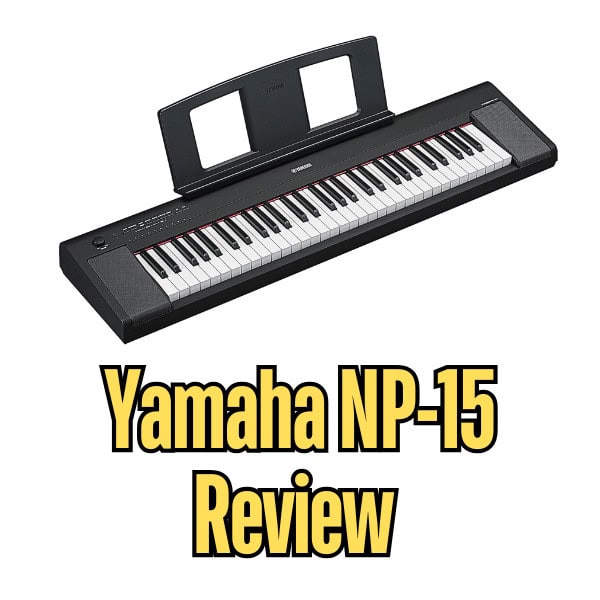
The Yamaha NP-15 is part of Yamaha’s “Piaggero” series, a line known for lightweight, portable, and straightforward digital pianos. Designed with beginners, casual hobbyists, and musicians on the go in mind, this 61-key model promises great sound at a budget friendly price.
But is the Yamaha NP-15 worth the money? I had the same question when I was looking for a cheap, beginner digital piano as well.
So today, I’ll break down what features the Yamaha NP-15 offers, what kind of person most benefits from this piano, and compare the NP-15 to similar pianos in its price range.
| PHOTO | PIANO |
|---|---|
 | Yamaha NP-15 |
 | Yamaha NP-35 |
 | Casio-CT-S1 |
 | Yamaha P-143 |
 | Casio CDP-S360 |
Quick Specs & First Impressions
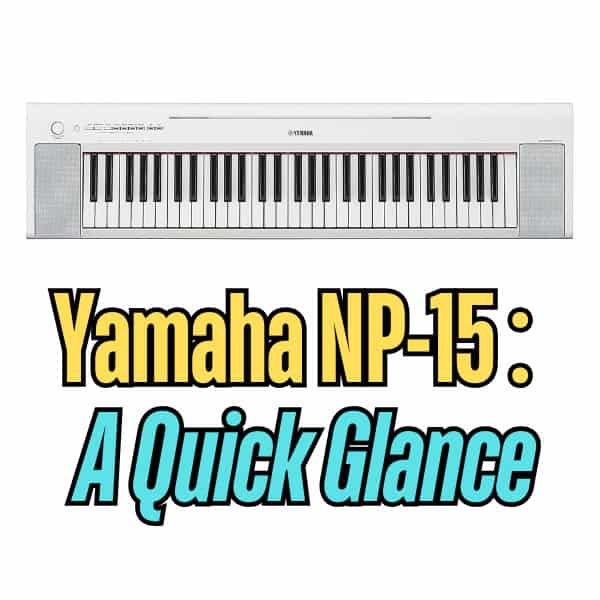
Right out of the box, the NP-15 feels light, sleek, and simple. The control panel is minimal, which is a plus for beginners who might be overwhelmed by too many buttons and menu screens.
| Features | Yamaha NP-15 |
|---|---|
| Keys | 61 key, Graded Soft Touch |
| Sound Engine | Yamaha AWM Stereo Sampling |
| Polyphony | 64 notes |
| Voices | 15 |
| Weight | 12 lb (5.4 kg) |
| Power | AC adapter or 6 AA batteries |
| Connectivity | USB to Host, headphone output |
| Dimensions | 41” x 10.2″ x 4.1″ |
The build quality feels solid despite the piano weighing just 12 lbs, and the matte black finish looks professional without being flashy.
Sound Quality

The Yamaha NP-15 uses AWM Stereo Sampling, the same technology found in some of Yamaha’s more expensive portable keyboards. This gives it a clear, warm piano tone that’s pleasing for practice and casual playing.
The acoustic piano voices are the highlight here too, as they sound clean and surprisingly expressive for a keyboard in this price range.
However, the 15 onboard voices are fairly basic, so don’t expect an expansive library of electric pianos, synths, or orchestral sounds. You do get ten preset piano songs with the NP-15, if that matters to you.
Yamaha NP-15 vs Casio CT-S1: Now the Casio CT-S1 offers a much broader selection of tones (61), including vintage electric pianos and organs, but Yamaha’s piano samples tend to sound a touch more natural to my ears.
Key Action & Playability
The NP-15’s Graded Soft Touch (GST) keys are unweighted, meaning they’re much lighter than the keys on an acoustic piano or Yamaha’s fully weighted models like the Yamaha P-525 or Yamaha DGX-670.
For a beginner, this can actually be an advantage, as lighter keys require less finger strength and make it easier to focus on note accuracy and rhythm. I think this is quite good for beginners, especially young beginners, who may be practicing on a piano for the very first time.
| PHOTO | PIANO |
|---|---|
| Yamaha NP-15 |
| Yamaha NP-35 |
| Casio-CT-S1 |
| Yamaha P-143 |
| Casio CDP-S360 |
On the other hand, players aiming to eventually transition to an acoustic or high-end digital piano may find the lack of resistance problematic. Weighted keys help develop proper finger technique and dynamics, which this model won’t fully replicate.
Yamaha NP-15 vs Yamaha P-143: The weighted action of the Yamaha P-143 feels closer to a real piano, making it better for those more serious about piano. With that said, the P-143 is heavier and more expensive.
If you want learn more of how the Yamaha NP-15 compares to similar pianos on the market, you can hop over here to read more of my digital piano reviews.
Features & Functions
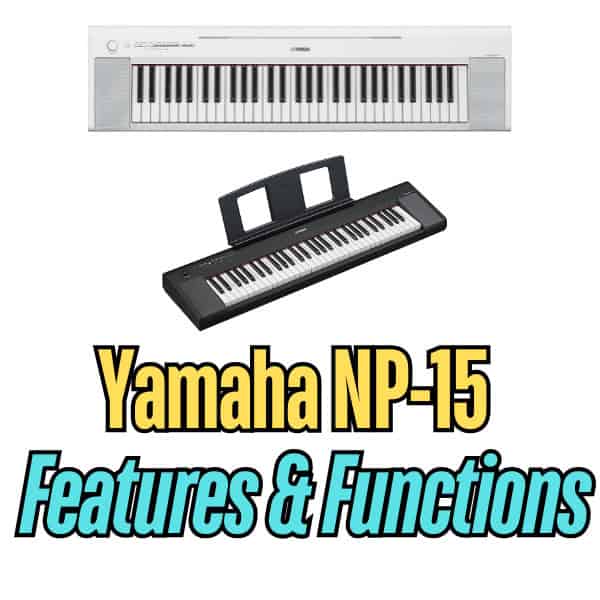
The NP-15 keeps things simple, but the features it offers are practical for its target audience:
Voices: 15 total, including pianos, electric pianos, organs, strings, and vibes.
Metronome: Essential for practicing timing.
Recording Function: Great for reviewing your performance.
Battery Operation: Up to 5 hours on AA batteries, which is ideal for outdoor gigs or lessons without power access.
USB to Host: Allows connection to music learning apps or DAWs for recording.
So what’s missing? Split keyboard functionality and Bluetooth connectivity are features you might miss on the Yamaha NP-15. And if that’s the case, you might want to consider the Roland GO: PIANO instead.
Portability & Build
At just 12 pounds, the NP-15 is incredibly easy to carry. It’s perfect for small apartments, dorm rooms, or as a rehearsal keyboard you can toss in the car. The plastic chassis is sturdy enough for normal use, though it won’t match the ruggedness of a professional stage piano.
For traveling musicians or teachers who need to move between locations, the NP-15 is a perfect, hassle-free option.
Who the Yamaha NP-15 is For
I think the Yamaha NP-15 is an excellent fit for:
Beginners looking for a simple, affordable way to start learning.
Casual players who just want to enjoy music without investing in a heavy or expensive setup.
Musicians on the move who need a lightweight keyboard for rehearsals or gigs where space is tight.
Children or students who benefit from lighter keys and fewer distractions.
If you’re an intermediate or advanced pianist, the NP-15 might feel too limited, especially in terms of key action and voice variety.
Price & Value for Money
At its current price range (usually under $300), the NP-15 sits in the “affordable digital piano for beginners” category. It offers genuine Yamaha sound quality and a build that feels more refined than many cheap keyboards.
Comparison Snapshot
| Model | Action | Price |
|---|---|---|
| Yamaha NP-15 | Graded Soft Touch | ~$300 |
| Yamaha NP-35 | Graded Soft Touch | ~$400 |
| Casio CT-S1 | Non-weighted | ~$250 |
| Roland GO:PIANO | Semi-weighted | ~$400 |
f you value portability and straightforward design, the NP-15 offers excellent value. But if you want weighted keys and more realistic piano feel, you may want to spend a bit more on something like the Roland GO: Piano or Yamaha P-143.
Yamaha NP-15 Pros & Cons
| Pros | Cons |
| Lightweight & portable | No fully weighted keys |
| Clear Yamaha piano sound | Limited voice selection |
| Affordable price | Minimal connectivity (no Bluetooth) |
| Battery operation | No split function |
Final Verdict
The Yamaha NP-15 is a great starting point for anyone that wants a simple, lightweight, and good-sounding keyboard without breaking the bank. It excels as a portable keyboard piano for practice lessons or casual playing, and its clean design keeps the focus on music rather than menu-diving.
However, its unweighted keys and limited feature set mean it’s not a lifelong instrument for advancing pianists. If your goal is to eventually play on an acoustic or high-end digital piano, you might want to consider something with weighted keys instead.
For beginners and casual players, though, the NP-15 is an easy recommendation, offering Yamaha quality in a highly portable, budget-friendly package.
You can also find more of my digital piano reviews here.