
Is the Kawai ES60 Good? – REVIEW
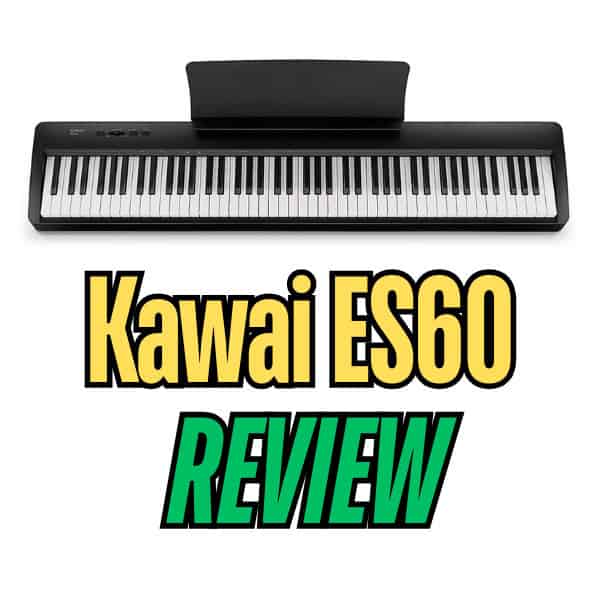
If you’re in the market for a portable digital piano that offers realistic touch and great sound, the Kawai ES60 might be exactly what you’re looking for.
Kawai has always been one of the more underrated digital piano brands on the marketplace, especially when it comes to stage pianos. So in this review, I’ll discuss the Kawai ES60’s key action, features, and even compare it to pianos like the Yamaha P-225 and Roland FP-30X.
Design and Portability
The Kawai ES60 carries forward the minimalistic and clean design that the brand is known for. At just 24 lbs (without the music rack attached), it’s compact enough for small rooms or light gigging, yet solid enough to feel like a real instrument.
The matte black finish and simple control layout are modern and understated. The top panel includes a backlit LCD screen and clearly labeled buttons for quick voice selection, layering, and settings.
The ES60 is a digital piano designed with both form and function in mind, something that’s especially important for users that want a piano that looks good in the home or on stage.
| PHOTO | PIANO |
|---|---|
 | Kawai ES60 |
 | Yamaha DGX 670 |
 | Yamaha P-525 |
 | Roland FP-30X |
 | Yamaha P-225 |
 | Roland FP-90X |
Key Action & Playing Feel
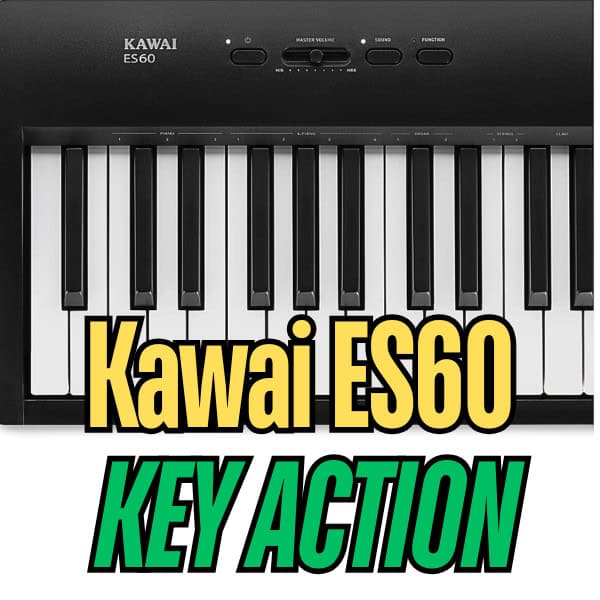
Key action is important, and the ES60 features Responsive Hammer Lite key action, which is a step above what you’d find in most entry-level models.
This particular action features graded keys, which are important on beginner pianos. The graded keys can build finger strength due to the keys’ weighted resistance, better resembling an acoustic piano.
Compared to the Yamaha P-225 (which uses Yamaha’s Graded Hammer Compact or GHC action) and the Roland FP-30X (which uses PHA-4 Standard), the ES60’s action is somewhere in between. It doesn’t quite reach the tactile depth of Roland’s PHA-4, but it offers a more cushioned and piano-like feel than the Yamaha P-225.
Also, if you want an even cheaper option than the Yamaha P-225, you can also consider the Yamaha P-143, which also uses GHC key action.
Sound Quality and Voices
Kawai has long been known for its superb piano sound, and the ES60 doesn’t disappoint. It features the Harmonic Imaging sound engine with samples taken from the flagship Shigeru Kawai SK-EX concert grand.
The tonal character of the concert grand sample is warm and rich, making it ideal for classical or jazz music.
You also get a modest but practical selection of 17 voices in the ES60, including various acoustic pianos, electric pianos, organs, strings, and pads. Each voice can be layered or split using the built-in dual and split modes as well.
The onboard speaker system features two 12cm speakers powered by 20W amps, which produce a full and natural tone for their size. And of course, there’s a headphone output that allows you to practice in silence too.
| PHOTO | PIANO |
|---|---|
| Kawai ES60 |
| Yamaha DGX 670 |
| Yamaha P-525 |
| Roland FP-30X |
| Yamaha P-225 |
| Roland FP-90X |
Features and Functions
The ES60 is designed to provide what pianists need without cluttering the interface with flashy, unnecessary features.
One thing I love is that the ES60 includes built-in Alfred lessons songs. You can learn songs by Bach, Chopin, Czerny, and Burgmüller, which can be great if you’re a pianist looking to advance your skill level.
The Kawai ES60 is also compatible with Kawai’s PianoRemote app and PiaBookPlayer, which allows you to browse music scores and control settings wirelessly.
This digital pianos also allows for wireless connectivity with music learning apps, DAWs, or virtual instruments.
And lastly, I like that the ES60 has a 3-song internal recorder (MIDI), with USB to Host and USB to Device support for external saving. The flexibility here is great, and is one major benefit of using a digital piano over an acoustic one.
Connectivity and Expandability
The ES60 is well-equipped for both casual players and those wanting to expand into more advanced setups, as well. The ES60 has the following connectivity options:
- USB to Host and USB to Device
- One 1/4″ stereo jack
- Line Out for connection to external speakers
- Kawai F-10H damper pedal
- USB MIDI
How It Compares to Other Digital Pianos
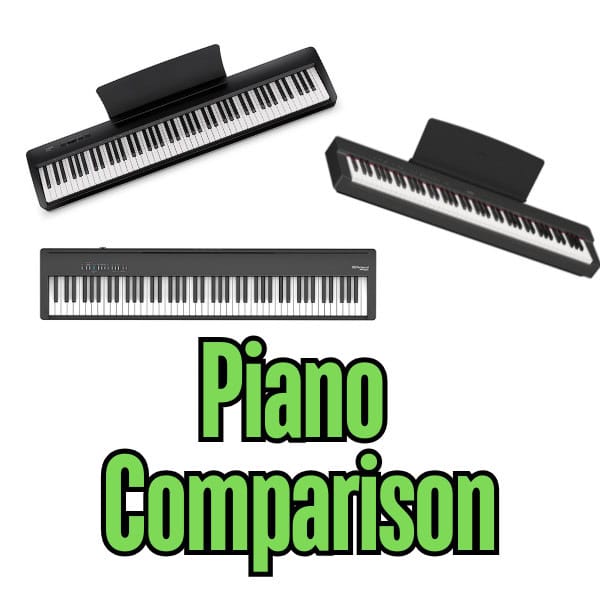
Here’s how the Kawai ES60 stacks up against its competition:
| Kawai ES60 | Yamaha P-225 | Roland FP-30X |
|---|---|---|
| RHCII | GHC Weighted | PHA-4 Standard |
| Harmonic Imaging | Yamaha CFX | SuperNATURAL Piano |
| 17 voices | ~24 voices | ~56 voices |
| 256 notes polyphony | 192 notes polyphony | 256 notes polyphony |
| Smart Pianist App | Smart Pianist App | Piano Every Day |
| 24 lbs. | 25 lbs. | 32 lbs. |
| $500-$600 | $700–$800 | $600-$700 |
Kawai ES60 vs Yamaha P-225: The ES60 offers better speaker output and a more expressive tone, but the P-225 features sampling from the excellent Yamaha CFX grand piano.
Kawai ES60 vs Roland FP-30X: The Roland FP-30X has more voices and slightly more responsive keys, but the ES60 holds its own in tonal warmth and clarity, especially when using headphones.
Pros and Cons
Here are the pros and cons when considering the ES60:
| Pros | Cons |
| Excellent piano tone (SK-EX sample) | Fewer voices than some competitors |
| Realistic graded hammer action | Not enough are to satisfy advanced pianists |
| Built-in lesson songs and app support | Slightly more expensive than similar models |
| 192 Notes of Polyphony | Not the lightest in its class |
Who Should Buy the Kawai ES60?
So ultimately, who is the Kawai ES60 aimed a, and who should buy it? Well, I think that an ES60 owner should be:
–Beginners and intermediate players who want a premium feel without spending over $1,000
–Students who’ll benefit from built-in lesson content
–Home players who prioritize tone quality and key feel over flashy features
–Composers or gigging pianists looking for a clean, focused playing experience with easy connectivity
Those who want extensive voice libraries or more advanced controller features might lean toward the Roland FP-30X instead.
Price and Value Analysis
The Kawai ES60 typically sells for $500, positioning it at the higher end of the beginner/intermediate portable digital piano range. However, you’re paying for superior tone, touch, and build quality, making it a strong value for pianists who care most about playability and realism.
Final Thoughts
To wrap up this Kawai ES60 review, it’s clear that this piano was made for serious players who don’t need gimmicks. With its expressive key action, warm SK-EX sample, and excellent connectivity, it serves as a dependable, satisfying instrument for home use, lessons, or even small gigs.
Hopefully this detailed Kawai ES60 review has helped you.
You can also find more of my digital piano reviews here.