

Whether you have a digital piano or an acoustic piano, piano care and maintenance is important for the long term health of your piano. Proper maintenance can extend the life of your piano, preserving its touch and sound for years.
In this guide, I’ll walk you through how you can care for your piano and keep it in peak condition for years to come.
Cleaning and Preserving Piano Keys

Piano keys are prone to collecting dust, oils, and grime. In fact, if they’re not well taken care of, you may have to one day discover how to fix sticky piano keys.
To prevent that, I recommend these easy tips to make sure your keys stay clean and in working condition:
Materials: Use a damp (not wet) cloth with a small amount of mild soap.
Technique: Clean one key at a time, front to back, to avoid moisture seeping between keys.
Ivory vs Plastic: Ivory keys (often found on older pianos) require extra care and should not be cleaned with alcohol. Plastic keys are more durable, but still need gentle handling.
Dry Thoroughly: Wipe keys dry immediately with a separate cloth. I recommend using either a microfiber cloth or a clean washcloth.
I also suggest closing the key cover when the piano is not in use. This will prevent dust from settling onto the keys, as well as save the keys from any unexpected external damage.
Also, as human beings, our fingertips contain natural oils and dirt. Over time, this can create grime on your keytops. So I recommend washing your hands before playing the piano.
Caring for the Piano’s Finish
Just like the keys, a piano’s exterior wood finish needs special attention. In order to keep it clean, I recommend the following tips when polishing or cleaning the wood finish:
| Cleaning Practice | Recommended Approach |
| Polish Selection | Use polish designed specifically for piano finishes |
| Avoid Harsh Chemicals | Do not use bleach, which can remove your piano’s finish |
| Wipe with the Grain | Preserves the natural wood pattern and finish |
Pedal and Action Maintenance
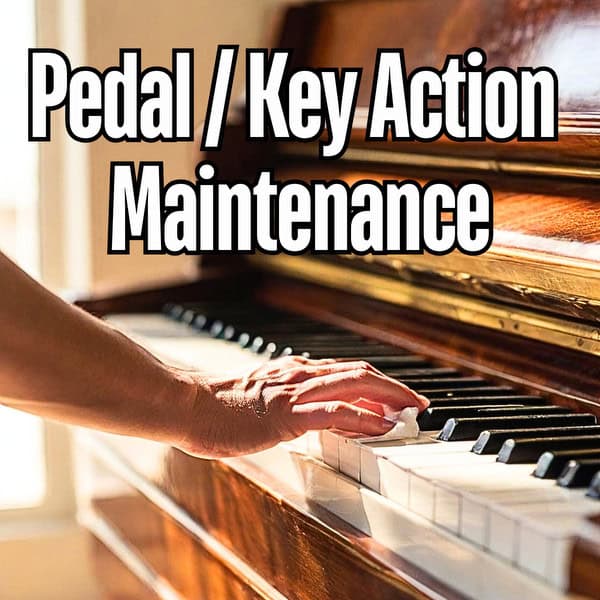
Taking care of your pedals (and any interior action mechanisms) is vital to the piano’s longterm health and performance. Similar to cleaning the keys and the piano’s exterior, cleaning the pedals is just as easy.
First, when it comes to pedal cleaning, you must wipe down the brass pedals with a dry microfiber cloth or slightly damp cloth. Remember to wipe very gently. If necessary, use a metal polish like Brasso to help resurrect your tarnished brass pedals.
Secondly, remember to not lean heavy items onto the pedals when they’re not in use. Only utilize the piano pedals when playing the piano. This will ensure the pedals’ longevity.
Lastly, do note that felt compression and everyday wear and tear can negatively impact your piano’s touch and responsiveness. So, if needed, contact a piano technician who can come by and adjust the piano’s action and keep the instrument in optimal working condition.
Environmental Piano Considerations

Pianos are beautiful instruments, but they’re also sensitive to environmental changes. You must be aware that poor conditions within the environment can harm your piano’s effectiveness.
For example, when it comes to humidity, you need to keep the room between 40% to 50% relative humidity. If the humidity in your room is considerably higher than this, you should purchase a dehumidifier to fix any potential problem.
As for the temperature of the room, aim for approximately 70°F. If you can maintain a stable environment and temperature for your piano, you can prevent wood expansion or contraction from occurring.
In an effort to prevent your finish from fading, it’s recommended that you keep the piano out of direct sunlight. Try to keep the piano away from radiators, too, as not to artificially increase the temperature of the instrument.
If your piano does become damaged beyond repair, some people do enjoy buying furniture made from old pianos. So you may want to consider recycling or even donating your piano so it can be repurposed.
Tuning and Professional Maintenance
Tuning is an essential part of taking care of a piano properly. It must be done regularly, ideally once a year, to ensure the piano always sounds its best.
Many elements factor into the need and frequency of tuning your piano. As mentioned before, the humidity levels of your environment can affect a piano’s tuning. If you’re in a high humidity climate, and you play piano often, it’s recommended to get your piano tuned two times per year.
When to Call a Piano Technician
Tuning your piano regularly helps keep it in good working order, but sometimes, a piano technician can fix even bigger issues.
If you find that your piano is simply out of tune, and don’t understand why, then it’s time to reach out to a technical who can fix that issue for you.
If the wood on your piano is warped, or there is a mechanical misalignment, then a piano technician can stop by and assess this problem.
You should schedule a full inspection by a Registered Piano Technician (RPT) every 1–2 years for optimal upkeep.
Moving and Long-Term Storage Tips
Improper handling during moves or storage can damage your piano. Here are a few key things to be aware of:
Use Professional Movers: Pianos are huge, heavy, and delicate. Be sure to always hire specialists for relocation.
Secure the Lid and Pedals: In order to protect the piano and its parts, wrap blankets around the case, and secure the pedal lyre and fallboard.
Climate-Controlled Storage: Never store a piano in a garage, attic, or basement. Mold can build up, causing damage to your expensive instrument. Make sure that, before you’re ready to move, your piano is stored in a climate-controlled environment.
Wrapping It Up
An acoustic piano is a rewarding instrument to learn and play, but piano care and maintenance is just as important. If you can keep your room at a comfortable temperature, and regularly get your piano tuned by a professional, you’ll be ahead of the curve when it comes to your piano’s long-term health.